How often to water houseplants depends on the soil, not the calendar. That can mean every few days or every few weeks, depending on the plant. Water tropical foliage plants when the top 1-2 in (2.5-5 cm) of soil is dry, and cacti and succulents when it is dry through the pot. Check weekly.
Why a watering schedule fails
A fixed schedule assumes your plant lives in the same conditions every week of the year. It never does. Light, warmth, humidity, pot and soil all change how fast a pot dries, and the plant itself changes as it grows.
Picture two identical pothos plants, one on a bright, sunny windowsill and one on a dim shelf. The sunny pot may dry sooner, while the shelf pot may stay damp longer. Watering both on the same fixed day each week risks a thirsty plant and a soggy one.
Seasons add another layer. Plants grow more slowly when days are short and light is weaker, so they use less water in autumn (fall) and winter than in summer.
Use a calendar as a reminder to check, not as an order to pour. Pick a set day, such as Sunday morning, and look at every plant. Water only the ones that have met their trigger. That quick routine replaces guesswork.
The 3 reliable ways to tell when to water
Use these together. For a deeper walkthrough, see how to tell if a plant needs water.
1. The finger test
Push a finger into the soil to the depth your plant needs. Extension guidance ranges from about 1 in (2.5 cm) to 2 in (5 cm) depending on the plant, so use the trigger in the quick-reference table below. If the soil at that depth feels dry, water. If it feels cool and damp, wait.
Moisture meters can be unreliable, partly because the top of the pot dries before the bottom does. Treat a reading as a hint and confirm by hand.
2. The pot weight test
Water a plant thoroughly, let it drain, then lift the pot. Remember how heavy it feels. Lift it again as the days pass. As the mix dries, the pot becomes noticeably lighter.
For most plants, a pot that feels slightly light is ready for water, while a heavy one can wait. It takes a few rounds to learn what “light” means for each pot, so calibrate by lifting right after watering and again when the finger test says dry.
3. Plant signals
Leaves that droop can mean thirst. The catch is that wilting can also come from root damage after too much water, and the two look alike. If a plant looks sad, check the soil before you pick up the watering can. Dry soil means water; wet soil means hold off and look for another cause. Our guide to the overwatered vs underwatered plant covers the differences in more detail.
What changes how often you need to water
- Light. Lower light slows growth, so a plant uses less water. A plant moved to a dimmer room may need water less often, so re-check after any move.
- Season and temperature. Warm, bright weeks mean more frequent checks. Cooler, darker months mean fewer.
- Pot material. Terracotta (clay) is porous, so water evaporates through the walls and the mix dries faster. Plastic and glazed pots hold moisture longer. If you switch pot types, expect your rhythm to change.
- Pot size. A small plant in an oversized pot leaves a lot of soil wet for a long time, which raises the risk of rot. Choose a pot only 1-2 in (2.5-5 cm) wider than the root ball. See how to repot a plant.
- Soil mix. A peat-based mix can resist water when it dries out completely, so top watering may run straight through.
- Humidity and airflow. Central heating lowers humidity, so pots near radiators or heating vents dry faster. Dry, heated air also makes leaves lose more water.
- Plant type and size. Cacti and succulents want long dry spells, while ferns and calatheas want steadier moisture.
Quick reference: watering by plant type
This is general indoor guidance, and the right rhythm varies with your home. The trigger matters more than the number of days.
| Plant | Water when… | Notes / metric |
|---|---|---|
| Pothos | Top 1-2 in of soil is dry | Top 2.5-5 cm |
| Monstera | Top 2 in of soil is dry (some extension advice says 2-3 in) | Top 5 cm (up to 5-7.5 cm) |
| Snake Plant | Only when soil is fully dry; very sparingly in winter | Dry through the pot |
| ZZ Plant | When soil is fully dry | Dry through the pot |
| Peace Lily | Keep lightly moist; water when the top inch dries | Top 2.5 cm |
| Spider Plant | When the top inch is dry | Top 2.5 cm |
| Fiddle Leaf Fig | Top 2 in of soil is dry | Top 5 cm |
| Calathea | Keep evenly moist, not soggy; use rainwater, distilled water or tap water left to stand | Slightly drier surface is fine in autumn/winter |
| Aloe Vera | Deeply, only when soil is fully dry | Dry through the pot |
| Orchid (Phalaenopsis) | When roots look dull silvery-white; no more than about once a week | Roots turn pale green after watering |
| Boston Fern | Keep consistently moist | Reduce a little in cool, low-light winters |
| String of Pearls | When soil is dry; pearls slightly wrinkle when thirsty | Dry through the pot |
Grouped by approach:
- Let them dry out fully: snake plant, ZZ plant, aloe vera, string of pearls.
- Let the top inch or two dry: pothos, monstera, spider plant, fiddle leaf fig.
- Keep evenly moist: peace lily (lightly), calathea, Boston fern.
- Orchid (Phalaenopsis): let silvery roots guide you, and water no more than about once a week.
For plant-specific detail, see snake plant watering, ZZ plant watering, aloe vera watering, how to water orchids and string of pearls watering.
How to water properly
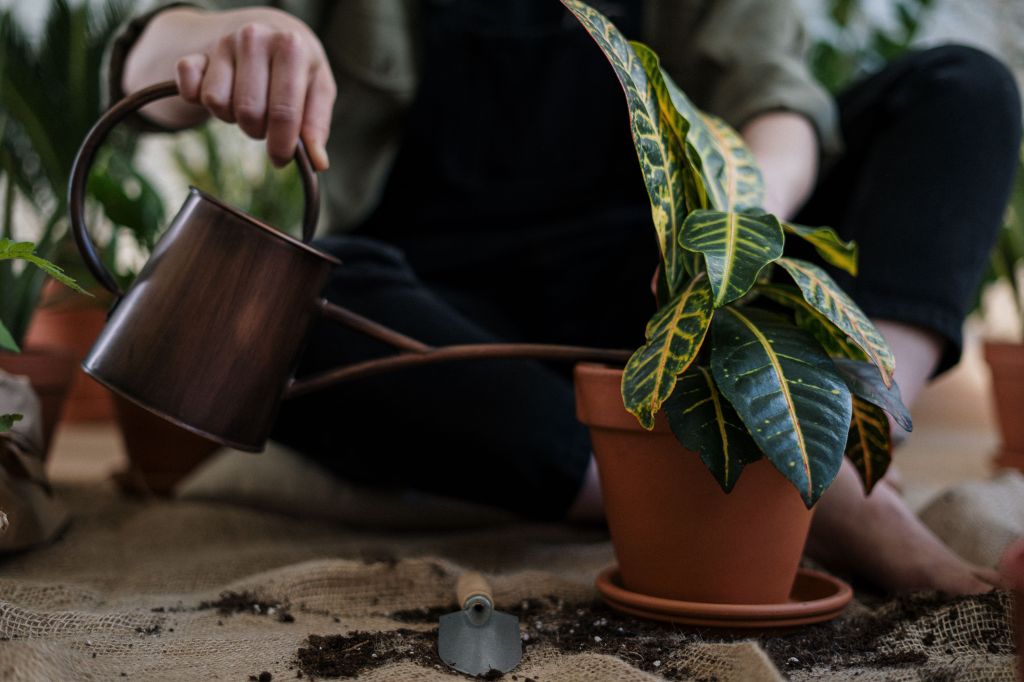
Top watering
- Pour slowly and evenly over the soil, not just in one spot.
- Keep going until water runs out of the drainage holes. This wets the whole root ball and not only the surface.
- Let it drain, then empty the saucer (drip tray) soon after the water stops running out. Do not leave the pot standing in water.
If the mix has shrunk away from the pot or the water runs straight through, the soil may have dried so far that it repels water. Submerge the pot in water until the bubbles stop, then let it drain.
Bottom watering
Set the pot in a container of water so the mix draws moisture up through the drainage holes. It suits plants such as African violets and mixes that shrink when dry, where water from above runs down the sides. Leave the pot until the surface feels damp, then drain it fully. See bottom watering for the full method.
Drainage
Pots with drainage holes let excess water escape, which helps avoid soggy roots. As a practical workaround for a decorative pot without holes, you can keep the plant in its plastic nursery pot and set that inside, lifting it out to water and drain. Read more in do houseplants need drainage holes.
Water quality and temperature
Use water that is roughly room temperature. Very cold water can damage roots, and one extension guide suggests avoiding both hot and cold, around 62-72°F (17-22°C).
Plants differ in how they cope with tap water. Calathea is a well-known case: rainwater or distilled water is safer, and tap water left to stand for 24 hours lets chlorine escape. Fluoride and hard-water minerals do not disappear this way, and softened water is best avoided. More in tap water for houseplants.
Watering in winter vs summer
| Winter (cool, short days) | Summer (warm, bright) | |
|---|---|---|
| Growth | Slower, so less water used | Faster, so more water used |
| Checks | Check as often, usually water less often | Check at least weekly; you will usually water more |
| Heating | Pots near radiators or vents dry faster | Check by hand; warm, bright spots may dry sooner |
| Cacti and succulents | Give only enough to prevent shriveling | Water when dry through the pot |
The soil check still decides. A plant by a radiator may need water sooner than one in a cool corner of the same room. For more seasonal tips, read houseplant care in winter.
Common watering mistakes
- Following a fixed calendar. Watering on autopilot, daily included, risks overwatering. Overwatering is the leading cause of houseplant death.
- Leaving the pot in saucer water. Roots sitting in water can rot.
- Choosing an oversized pot. Extra soil stays wet. Repot only one size up, as in how to repot a plant.
- Ignoring drainage. Without holes, excess water has nowhere to go.
- Treating every plant the same. A snake plant and a Boston fern need very different care.
- Watering because leaves droop. Check the soil first, since overwatered vs underwatered plant symptoms overlap.
- Using very cold water. It can damage roots, so let it come to room temperature.
FAQ
Should I water my houseplants once a week?
Not by default. Weekly is a good day to check, not necessarily a day to water. Some plants will need water on that day, while a snake plant or ZZ plant may want a much longer gap. Push a finger into the soil first and water only when your plant’s trigger is met.
Can you water houseplants every day?
For most houseplants, no. Watering on autopilot, daily included, risks keeping the roots too wet, and overwatering is the leading cause of houseplant death. Water only when the soil has dried to the right depth for that plant.
How long can houseplants go without water?
It depends on the plant, its pot size, the season, the light and your home. ZZ plants, snake plants and succulents tolerate dry spells far better than ferns or calatheas. Cooler, darker conditions usually stretch the gap, and warm, bright ones shorten it. Check the soil before you leave.
How often should I water houseplants in winter?
Usually less often, because plants grow slowly in short, dim days. Keep checking on your usual day, and water only when the soil has dried to the plant’s trigger. Pots near heaters may dry faster than expected, so do not assume.
Is it better to water from the top or the bottom?
Top watering suits most plants, as long as you water until it drains and empty the saucer. Bottom watering helps plants like African violets and soil that has shrunk away from the pot. Either works if the whole root ball ends up moist and the pot drains afterwards.

