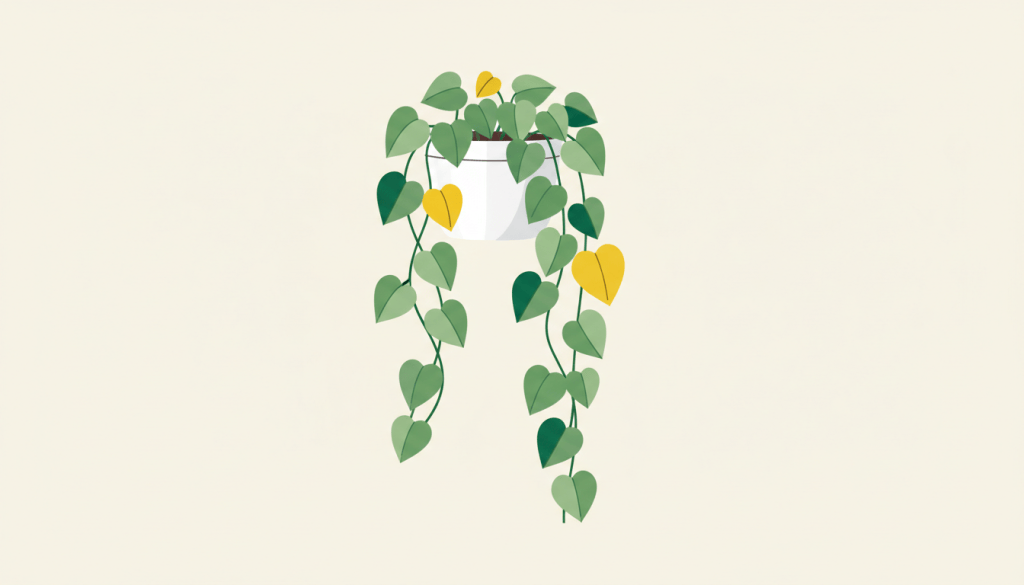
Pothos leaves turning yellow most often point to overwatering and poor drainage, where soggy soil damages the roots. Underwatering, unsuitable light, normal aging, fertilizer problems and pests come next. Check the soil 1-2 in (2.5-5 cm) down and look at the roots first. Fully yellow leaves rarely turn green again, so fix the cause rather than the leaf.
Want the fast route? Jump to the symptom table. For the full routine, see our pothos care guide.
Quick symptom checker
Match what you see to the most likely cause, then read the matching section below.
| What you see | Most likely cause | First thing to do |
|---|---|---|
| Several leaves yellow, soft or limp, soil still wet | Overwatering or poor drainage | Stop watering and check the roots |
| Leaves dry or curling, soil dry and pot light | Underwatering | Soak thoroughly, let it drain |
| Whole plant pale, slow growth, long gaps between leaves | Too little light | Move to bright indirect light |
| Bleached or scorched patches on leaves facing the window | Too much direct sun | Pull back from the glass |
| One oldest leaf yellow, new growth healthy | Natural aging | Remove the leaf, change nothing |
| Older leaves evenly pale, slow growth | Hunger for nutrients | Feed lightly in the growing season |
| White crust on soil, yellowing or brown tips | Fertilizer salt build-up | Flush the pot |
| Webbing, cottony bits or sticky residue | Pests | Isolate and treat |
| Pale or yellow leaves after a cold night or near a vent | Possible cold or draft damage | Move somewhere warmer |
The causes, ranked from most to least likely
Water-related problems usually top the list. Ranking comes from what care guides report, not a measured count. Only the first place is clearly backed by sources, and beyond it the order is a judgment call, so treat it as a starting point.
1. Overwatering and poor drainage (including root rot)
This is the usual suspect. The Royal Horticultural Society names overwatering, which leads to root rot, as the most common pothos problem. Wet soil starves roots of air, and the leaves show it.
Look for several yellow leaves at once, soft or limp growth, soil that stays wet for days after watering, dark mushy stems or a foul smell. Limp leaves can also be a separate worry, so see why your pothos is drooping.
How to fix it:
- Stop watering and slide the plant out of its pot.
- Healthy roots are firm and pale. Rotted roots are soft, dark brown or black.
- Cut away the rotted parts with clean scissors.
- Repot into fresh potting mix that drains well, in a pot with drainage holes.
A plant can often be saved if some firm roots remain. Severe rot may be fatal, and fungicides are generally not recommended for houseplants. Root rot is caused by water molds and fungi such as Pythium or Phytophthora, which thrive in waterlogged soil.
2. Underwatering or long dry gaps
Too little water can give a different picture: leaves that dry out or curl, soil that feels dry and a pot that feels light. For a full side-by-side comparison, see overwatered vs underwatered plant. If tips also turn crisp, read about brown leaves on a pothos.
The fix is a thorough soak until water runs out of the drainage holes, then let it drain fully. After that, use one simple rule: water when the top 1-2 in (2.5-5 cm) of soil is dry, and wait longer in low light or in the cooler, darker months. No source supports a fixed calendar, so let the soil decide.
3. Wrong light
Low light mostly shows up as slower growth, faded variegation and pale leaves. Whether it directly causes yellowing is less clear, so rule out watering first. Stretched, sparse vines are a sign of the same problem, and our leggy pothos guide covers that.
Direct summer sun has the opposite effect and can scorch leaves, especially light-colored cultivars. Aim for medium to bright indirect light. A spot a little back from a bright window usually works.
4. Natural aging
An old leaf near the base can yellow and drop while new growth keeps coming. That is the plant moving energy to younger leaves. One or two at a time is normal. See the normal yellowing section below.
5. Fertilizer problems
Too much fertilizer causes salt build-up: a white crust on the soil or pot rim, brown tips and slowed growth, and leaves may yellow. Too little can pale the oldest leaves first, because the plant moves nitrogen to new growth.
To flush salts, scrape off the surface crust, then run water through the pot, at least 2-3 times its volume, letting it drain fully. Afterwards, feed diluted or at label rate every 1-2 months in the growing season only. Mineral build-up from tap water may also contribute, so rainwater or filtered water is an option in hard-water areas.
6. Pests
Pothos can get mealybugs and spider mites. Check under leaves and in the joints where leaves meet stems.
- Mealybugs: white, powdery or cottony clusters and sticky residue.
- Spider mites: fine webbing, yellowing and stunted growth.
- Scale: stationary brown bumps with sticky residue.
Isolate the plant. Wipe pests off with isopropyl alcohol on cotton or spray insecticidal soap. Repeat after about 7-10 days and keep checking, since one round often misses eggs.
7. Cold or draft stress
Pothos is happiest at roughly 65-85°F (18-29°C). Keep it above about 55°F (13°C) and away from cold drafts, vents and heat sources. Cold or draft damage may show up as pale or yellow leaves, so check where the plant sits.
Ordinary household humidity is fine. Low humidity mainly causes crispy tips, not yellowing.
8. Root-bound plant or tired soil
Roots circling the pot or poking out of the drainage holes mean the plant has outgrown its home. Repot every 1-3 years depending on growth, going up one pot size, roughly 1-2 in (2.5-5 cm) wider. A cramped pot can stress the plant and may contribute to yellowing, but an oversized pot holds wet soil for too long, so resist going bigger.
A rarer cause: ethylene gas from ripening fruit or a faulty gas heater can yellow leaves, though the evidence comes from greenhouses, not homes. It is unlikely, so check everything else first.
How to diagnose your pothos in 5 steps
- Read the pattern. Note which leaves are affected (old or new), how many, and whether they feel soft or crisp.
- Test the soil. Push a finger 1-2 in (2.5-5 cm) into the soil and lift the pot. Both are useful guides, though weight misleads with large, heavy pots.
- Check drainage. Confirm the pot has drainage holes and that no water sits in the saucer.
- Check light and temperature. Look at where the plant sits: direct sun, a dim corner, a vent, a cold windowsill.
- Inspect roots, stems and leaf undersides. Slide the plant out. Firm pale roots are healthy; soft dark roots are not. Look for pests while you are there.
How to fix it
Work in order: fix the cause, then tidy the plant.
- Correct watering, light or temperature first.
- Treat roots or pests if you found them.
- Remove fully yellow leaves, since they rarely recover.
- Leave partly yellow leaves a while if they still look useful.
Recovery takes patience. New growth may take several weeks once conditions are right, and slower in winter. Fully yellow leaves rarely turn green again, but leaves just starting to pale may recover if you act early.
How to stop pothos leaves turning yellow again
- Water by the soil, not the calendar: top 1-2 in (2.5-5 cm) dry first.
- Use a pot with drainage holes and well-draining mix.
- Empty the saucer within 15-30 minutes of watering.
- Give medium to bright indirect light.
- Feed lightly every 1-2 months in the growing season, and little or none in winter.
- Repot every 1-3 years, one size up.
- Water less in the cooler, darker months.
- Keep it above about 55°F (13°C) and away from vents.
More on all of this is in our pothos care guide.
When yellow leaves are normal
Not every yellow leaf is a problem.
- One old lower leaf yellowing now and then is ordinary.
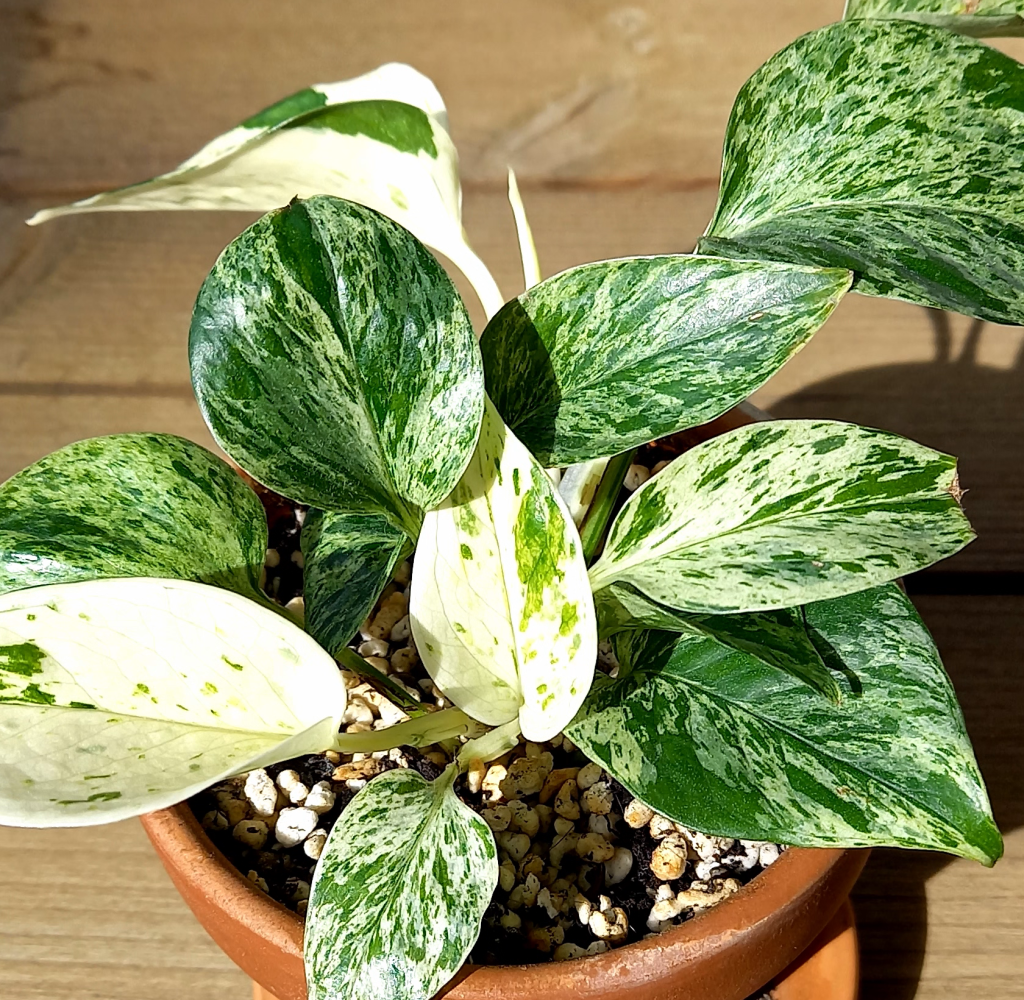
- Neon pothos is lime-green by nature, and Marble Queen has cream and white variegation, so those colors are not damage.
- Growth slows in the cooler, darker months, so a leaf or two may go.
When to worry: several leaves yellowing at once, or yellowing that spreads quickly. Then work through the five steps above.
FAQ
Should I cut off yellow pothos leaves?
Yes, once a leaf is fully yellow, because it rarely recovers. Use clean scissors and cut at the base of the leaf stalk. Leave leaves that are only slightly pale for now. They may improve once the cause is fixed.
Can yellow pothos leaves turn green again?
Fully yellow leaves rarely turn green again. A leaf that is just beginning to pale may regain color if you correct the cause quickly. Focus on protecting new growth, which should look healthier once watering, light and temperature are right.
How can I tell overwatering from underwatering?
Check the soil and the leaf feel. Overwatered plants have wet soil and soft, limp yellow leaves. Underwatered plants have dry soil, a light pot and dry, curling leaves. Our guide to overwatered vs underwatered plant puts the differences side by side.
Why is only the bottom leaf of my pothos yellow?
A single yellow leaf at the base while the rest looks healthy is usually natural aging. The plant sends energy to new growth. If more leaves follow quickly, or new growth looks poor, check watering and roots using the five steps.
Can a pothos recover from root rot?
Often, if some firm roots remain. Trim away soft, dark roots, repot in fresh well-draining mix with drainage holes, and water only when the top 1-2 in (2.5-5 cm) is dry. Severe rot may be fatal, so act early. Firm, pale roots are a good sign.
For the rest of pothos care, head back to the pothos care guide.