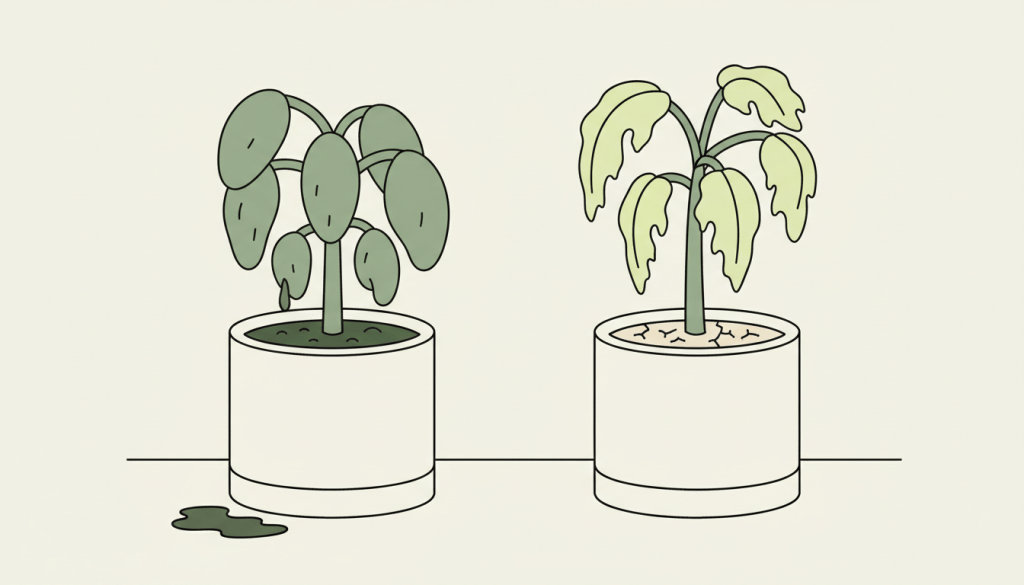
Overwatered plants tend to have soft, yellowing or drooping leaves with soil that stays wet. Underwatered plants usually have dry, crispy, curling leaves and soil that is dry, sometimes pulling away from the pot edge. Leaves alone can mislead, because both problems can look similar. Check the soil and the weight of the pot first.
Overwatered vs underwatered: side-by-side symptoms
Both problems can cause yellowing, drooping and leaf drop, so no single leaf symptom settles it. Use the table as a guide, then confirm with the checks in the next section.
| What you see | Often overwatered | Often underwatered |
|---|---|---|
| Leaf feel | Soft, limp | Dry, crisp |
| Leaf colour | Yellowing, often on lower or inner leaves first; browning that starts in the leaf middle | Yellowing or scorched look; brown tips and edges |
| Drooping and leaf drop | Droops even though the soil is wet; leaves drop later | Droops because the plant is short of water; leaves may curl |
| Soil | Stays damp, may look dark or slimy | Dry, pale, may crack or shrink from the pot wall |
| Pot weight | Heavy | Noticeably light |
| Roots | Brown or black, mushy, may smell sour | Can look rusty or light brown |
Brown tips are only a hint. Low humidity, fertiliser salt build-up and drafts can cause them too. If yellow leaves are your main worry, see yellow leaves on houseplants.
How to confirm in 60 seconds
Run these four checks in order. Together they take about a minute.
1. Finger test
Push a finger into the soil about 1-2 in (2.5-5 cm) deep. In a large pot, go deeper, because the surface dries first. Dry means thirsty; damp or wet means water is not the missing ingredient. For more detail, read how to tell if a plant needs water.
2. Lift the pot
A dry pot feels clearly lighter than a freshly watered one. If it feels heavy, wait before watering again. Lift it right after a proper watering once, so you know what “heavy” feels like for that plant.
3. Check drainage
Look for drainage holes in the base. Check whether water is standing in the saucer or in a decorative outer pot. Pots with no holes make overwatering and rot more likely, and decorative covers can trap water out of sight.
Also watch how water behaves when you pour it. If it runs straight out of the bottom without soaking in, the soil may be too dry to absorb it (see the special cases below).
4. Look at the roots
If the first three checks do not settle it, slide the plant out of its pot. Healthy roots are pale (white to light tan), firm and have no smell. Rotted roots are brown or black, mushy or slimy, and may smell foul.
Quick decision list
- Dry soil, light pot, crispy leaves: underwatered.
- Wet soil, heavy pot, soft or yellow leaves: overwatered.
- Wet soil but the plant is wilting: suspect root damage. Waterlogged roots struggle to take up water, so the plant can look thirsty while the soil is wet. Do not add more water. See why is my plant drooping.
How to fix an overwatered plant
- Stop watering. Let the soil dry out until the top 1-2 in (2.5-5 cm) is dry.
- Empty the saucer and any outer pot so roots are not sitting in water.
- Check the roots if the soil stays wet or the plant keeps declining. Remove damaged or diseased roots and keep as much living root as you can.
- Repot into fresh, well-draining mix in a pot with drainage holes.
- Water only when the soil tells you to, not on a fixed day.
Recovery depends on how much healthy root remains. If some healthy roots remain, the plant can recover, but damaged leaves do not regrow. For rot that has spread, read root rot in houseplants, or the wider guide on how to save a dying houseplant.
How to fix an underwatered plant
- Water thoroughly, pouring slowly until water runs out of the drainage holes. Letting it run for about a minute helps the whole root ball get wet.
- Empty the saucer after the pot has drained, within about an hour.
- If the soil is bone dry and repels water, stand the pot in lukewarm water until the bubbles stop rising, then let it drain. Our guide to bottom watering plants walks through it.
- Be patient with very dry mix. It may need several rounds of watering before it holds moisture again.
- Trim badly crisped leaves if you like. They will not recover.
Do not flood a dried-out plant over and over to “catch up”. Soak it properly once, then return to checking the soil. Recovery varies by plant and by how long it was dry.
Special cases that confuse the diagnosis
Succulents and cacti
Wrinkled or shrivelled leaves usually point to thirst, especially when the pot is light and the soil is dry. Overwatering damages roots and causes rot, and soft, mushy leaves can go with it. The catch is that rot can also make leaves wrinkle and look thirsty, so always check the soil and the base of the plant before reaching for the watering can. In winter rest, succulents need only enough water to stop shrivelling.
Drought-tolerant plants
Some plants cope with drier soil than others. Check your plant’s own care guide, and test the soil before every watering.
Root-bound plants
A plant that dries out unusually fast may be pot-bound. A dense mass of roots leaves little soil to hold water, and water can run past a dry core. Look for roots poking through the drainage holes or circling the root ball. If so, repot into a pot only slightly larger, about 2 in (5 cm) wider.
Hydrophobic soil and dried-out potting mix
Mix that has dried out completely can shrink from the pot wall and resist rewetting. Water then runs down the sides and out of the bottom, leaving the root ball dry. Peat-based mixes in particular can behave this way once they dry thoroughly. Soaking the pot from below usually fixes it.
Winter slowdown
Indoor plants often grow more slowly in winter, so they usually need less water, and watering as normal can lead to rot. Some plants go dormant. Do not assume the soil always dries slower, though, since plants near heaters can dry faster. Check the soil, not the calendar.
How to avoid both problems
- Check the soil, not the date. Water when the top layer is dry for that plant type. Our guide to how often to water houseplants covers the details.
- Use pots with drainage holes and empty saucers after watering.
- Pick the right pot size. An oversized pot holds water for too long. Step up only about 2 in (5 cm) at a time.
- Use a well-draining mix suited to the plant.
- Water thoroughly, then let the soil dry as that plant prefers.
- Adjust by season. Expect to water less when growth slows.
- Use a moisture meter with care. The top dries first, so take readings about a quarter of the way down and near the bottom.
Care needs vary with light, temperature and humidity, so treat any watering range as a starting point.
Plant-specific guides
Some plants show these problems in their own way:
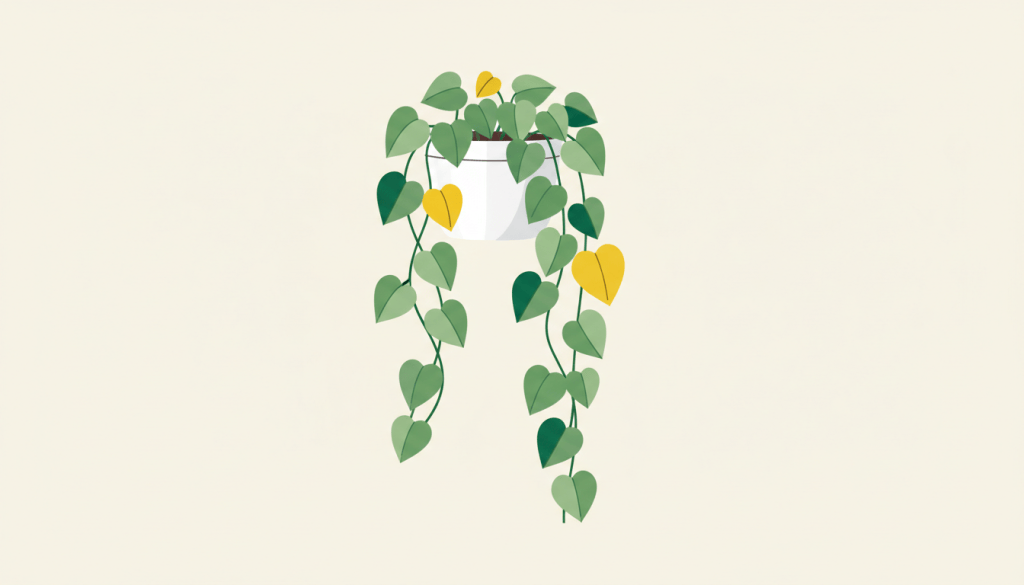
- Pothos leaves turning yellow
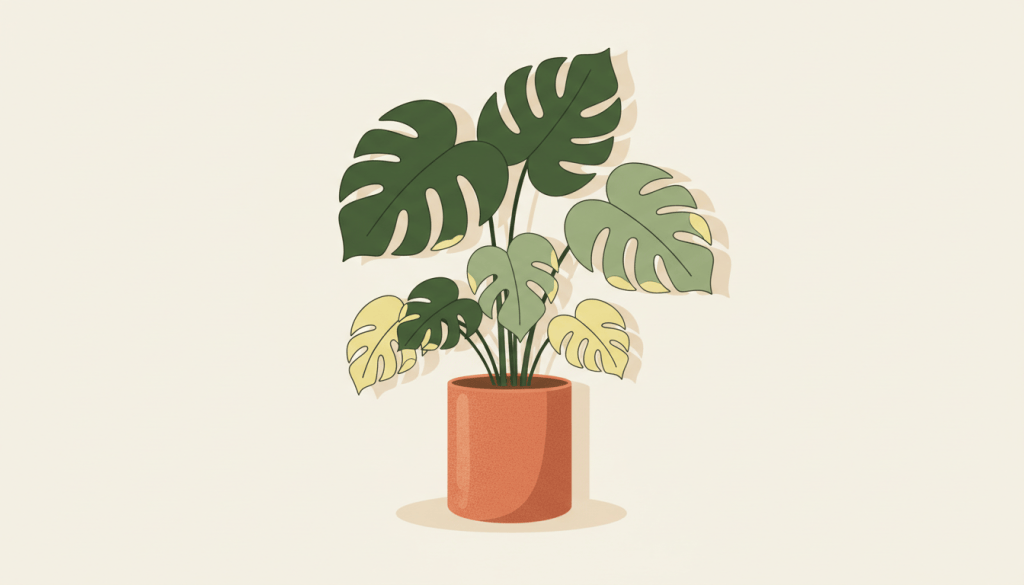
- Monstera leaves turning yellow
FAQ
Can an overwatered plant recover?
Often, yes, if some healthy roots remain. Stop watering, let the soil dry, and repot into fresh mix if rot is present. Damaged leaves will not return to normal.
Do overwatered and underwatered plants both have yellow leaves?
Yes. With overwatering, yellow leaves tend to be soft and the soil is wet. With underwatering, yellow or brown leaves tend to feel dry and crisp, and the soil is dry. See yellow leaves on houseplants for other causes.
Why is my plant drooping when the soil is wet?
Roots sitting in waterlogged soil can be damaged and unable to take up water. The plant then droops even though water is plentiful. Check the roots and drainage, and read why is my plant drooping.
Should I water a wilting plant straight away?
Not before checking the soil. If it is dry, water thoroughly. If it is wet, more water will make things worse.
How long does an underwatered plant take to perk up?
It varies with the plant and how dry it became. Crisped or scorched leaves will not recover.